Reality of the Algerian management systems
Depot operations ran on phone calls, messaging apps, and manual registers. Information got lost. Decisions got delayed. Nobody had a clear picture of what was happening across facilities.
The real design challenge
Taking a complex internal ecosystem with dozens of interconnected entities — products, workers, tasks, depots, transfers — and making it navigable without stripping away the depth the business actually needs.
System before screens.
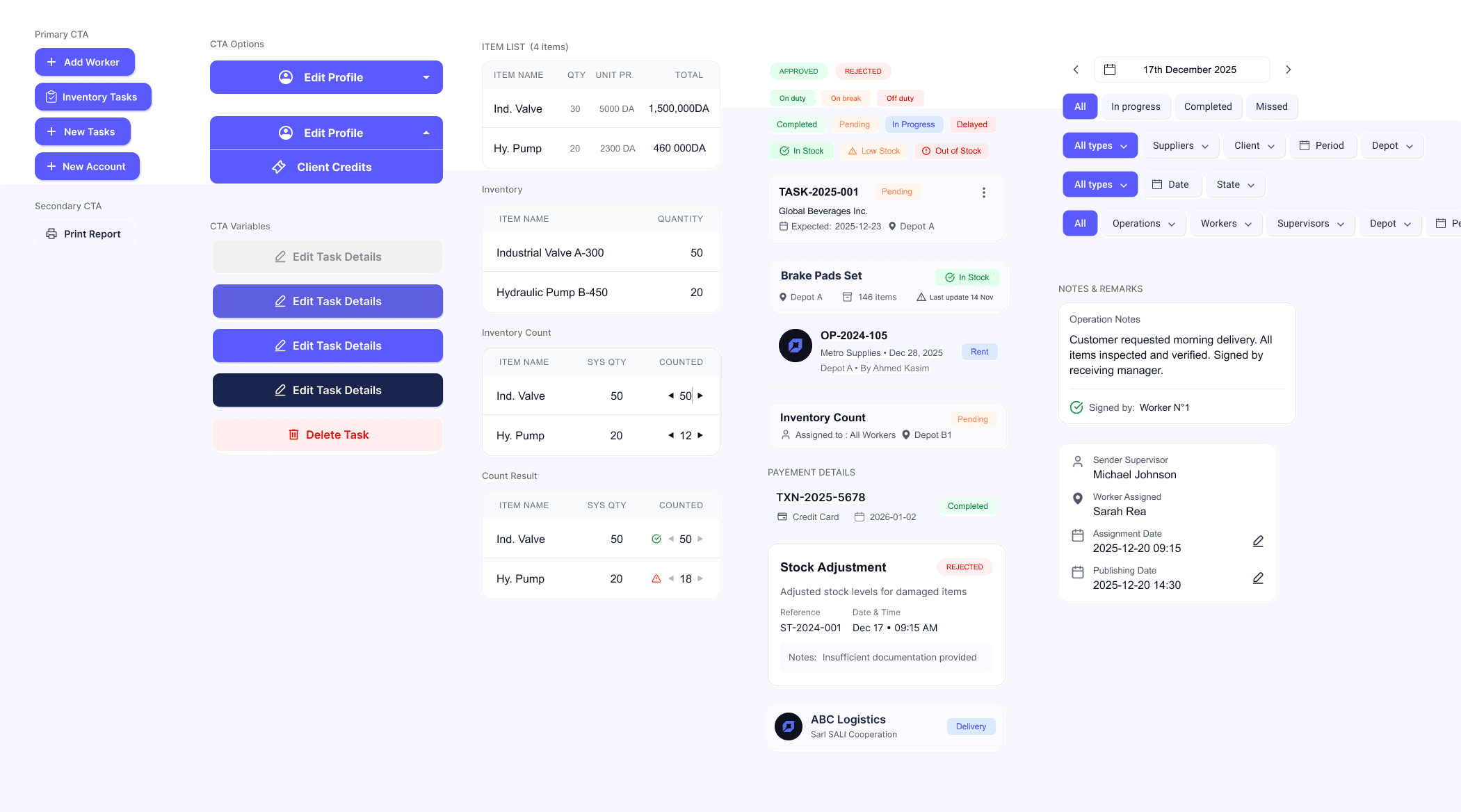
Before designing a single frame, I mapped the full information architecture — every entity, every relationship, every action. That groundwork is what made the final UI feel simple despite the complexity underneath.
Led with product logic, not visual execution
Designed a flat, predictable navigation to reduce cognitive load in high-pressure environments
Treated status indicators and data viz as functional, not decorative
Accounted for offline states as a first-class design concern — not an afterthought
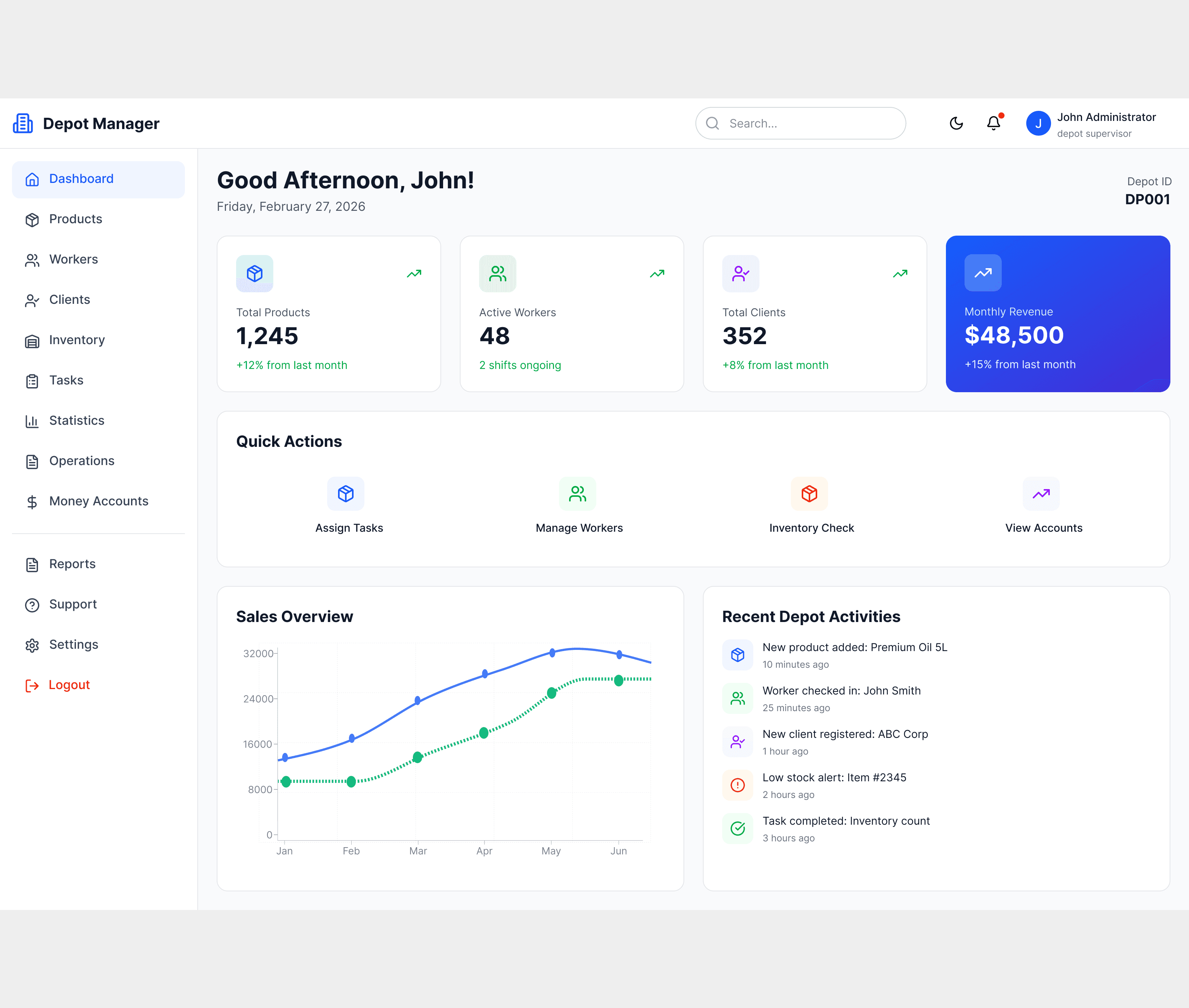
Delivered a complete, production-ready mobile application — solo, end-to-end.
What the client received was a structured operational system with immediate and long-term value:
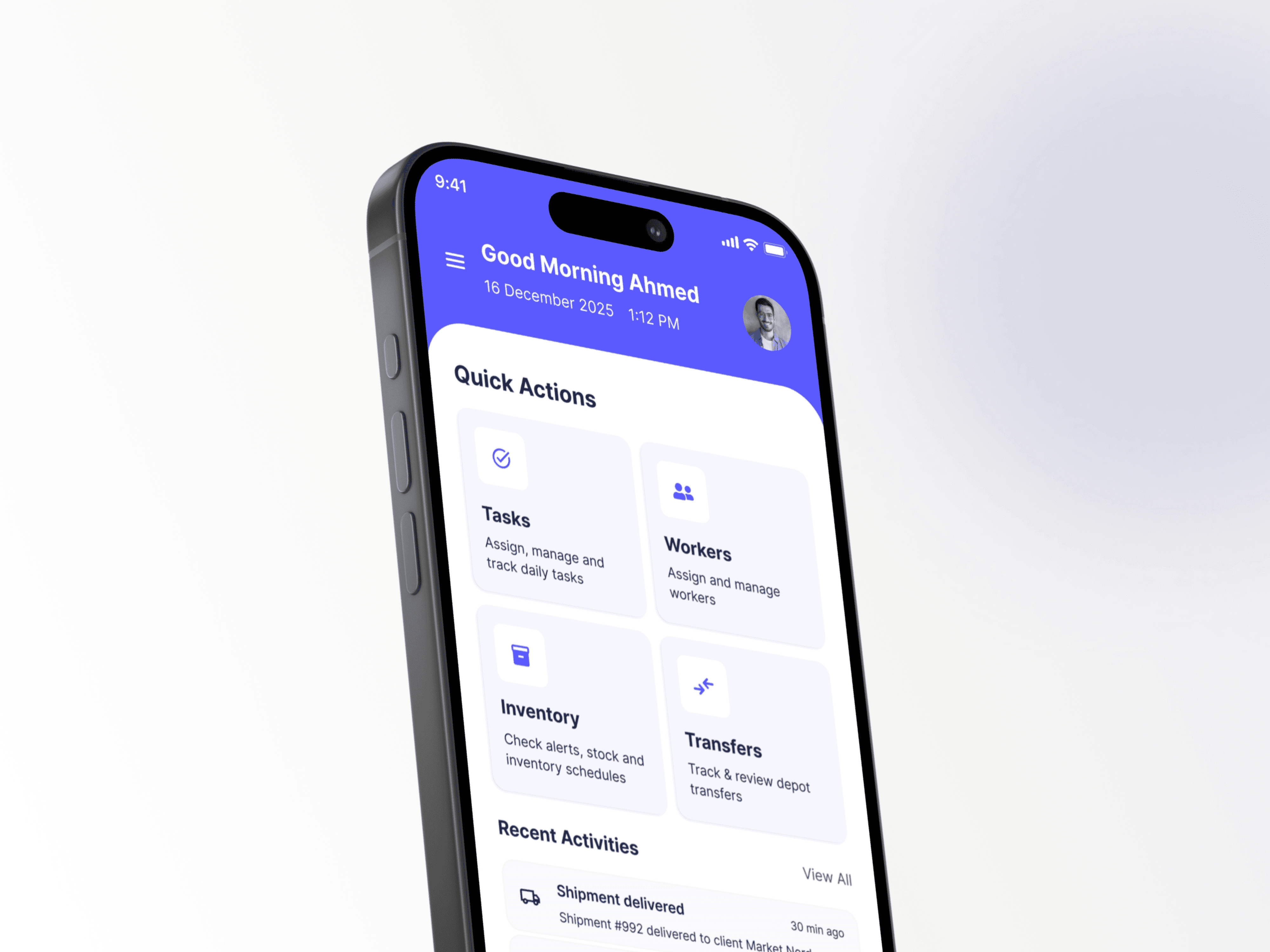
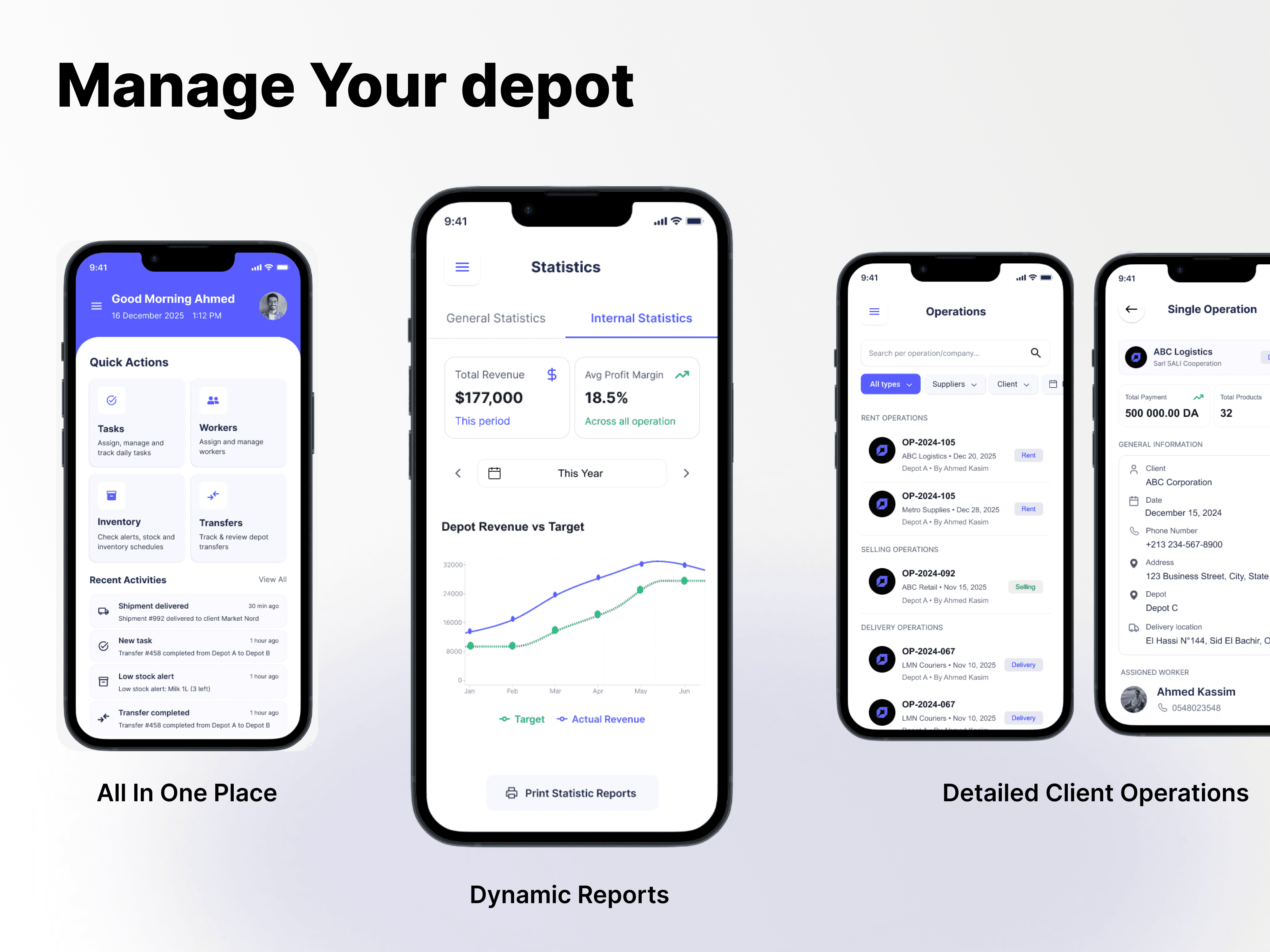
Centralized operational visibility — all depot activity, inventory, and workforce data accessible from one place
Reduced management friction — replaced fragmented communication with clear, role-specific workflows
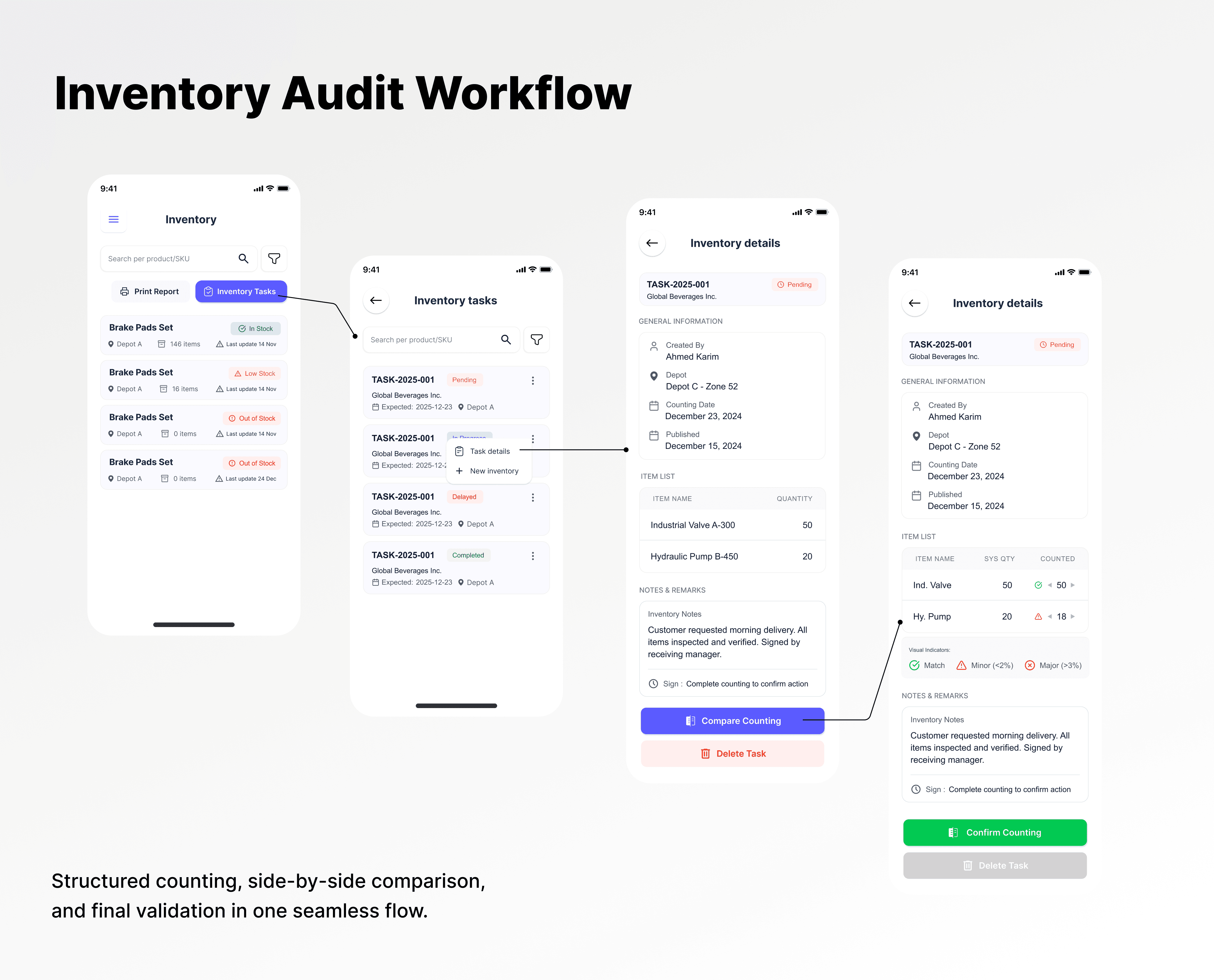
Improved workflow clarity — every process from task assignment to product transfer follows a defined, trackable path
Scalable system foundation — a component library and module logic built to absorb growth without redesign
Strong internal tool structure ready for expansion — the architecture supports future modules without breaking existing flows
The current version functions as a robust operational MVP with strong long-term scalability potential.